
When you are searching or applying for remote work on LinkedIn, it’s not just about applying for vacancies. Your profile on LinkedIn should actually work for you before you even submit an application. Recruiters will find your profile on LinkedIn, see your experience, and decide if your background qualifies you for the company’s needs. This is why it’s dangerous to think about LinkedIn in terms of a normal online CV. While a CV is created for a particular job, the profile on LinkedIn should perform an entirely different function.

It must show who you are, what you can do, what kind of remote job you expect, and why you should be chosen. Many job candidates just put titles and dates of their previous jobs. But the profile that is appropriate for remote work should contain something else apart from the list of their duties.
Your LinkedIn Profile Is More Than a Resume
Your resume should be treated as your document for application, and your LinkedIn profile as your business shopfront. The person who discovers you via search should be able to grasp your experience and career interests with ease.
In terms of focusing on remote work, a great LinkedIn profile must provide clear answers to such things as
- Your key skills
- The type of remote work you seek
- Your valuable experience
- The outcomes of your work
- The software and tools you are familiar with
- The output of your work
- The ability to work in an efficient manner.
Write a Remote-Focused LinkedIn Headline
A better option would be a headline that summarizes your position, useful skills, and type of telecommuting. Such a headline gives more ideas of a person’s skills. You don’t have to write down all your advantages. Just think of the skills that may be most fitting for your remote position.
Turn Your About Section Into a Strong Introduction
Refrain from repeating your CV. Begin with outlining your profession and the challenges you overcome. So, think about how to answer the question of, what does your potential employer gain from working with you? Use straightforward language when writing and avoid expressions like “hardworking professional” unless you explain what you really mean by this.
Turn Responsibilities Into Achievements
Using job descriptions in your experience portion of LinkedIn accounts for one of the most common errors.
Example:
“Responded to emails and managed customer requests.” While stating your duties, it doesn’t give an idea of how well you have performed them.

“Processed emails and ensured that all support requests were addressed in a timely manner.”
- Issues you solved
- Improvements you introduced in various processes
- Clients/team members you assisted
- Projects you worked on
- Instruments you utilized
- Indices that you managed to improve, if any
You don’t have to find impressive numbers for each responsibility, as sometimes simple and honest descriptions are better than ones presenting a success story.
Show Skills That Matter in Remote Work
Essential skills may vary according to profession and may include written communication, project management, technical skills concerning clients, organization skills, etc. Moreover, the tools in question should also match the professional background of the candidates.
Use the Featured Section as Proof of Work.
Your profile gets better when you do not only say that you are good at something, but you also prove it with concrete evidence.
The Featured section allows you to present the examples of your work that can be useful. Depending on your occupation, it can be writing samples, design samples, project samples, presentations, research work, and so on. This can be handy for your starting career.
- Use your best examples.
- Use simple titles for your samples.
- Exclude the old or weak examples from your collection.
- Make sure all materials you show look professional.
Having a few examples that are strong is better than having all the possible works in this section.
Add Portfolio Links Carefully
In case you already possess a professional portfolio, make it visible via your LinkedIn profile. This portfolio arms recruiters with additional information about you that is very beneficial for specific careers like writing, design, marketing, development, research, etc., where portfolio examples serve as proof of quality.
Make Your Profile Easier for Recruiters to Understand
When faced with an unclear profile, they will likely not see your useful experience. Think of your profile as a stranger would. Would the stranger be able to see your role, strongest skills, experience, and career path? Your profile should tell the same story. Your headline should reflect your About section. Your experience should corroborate your skills.
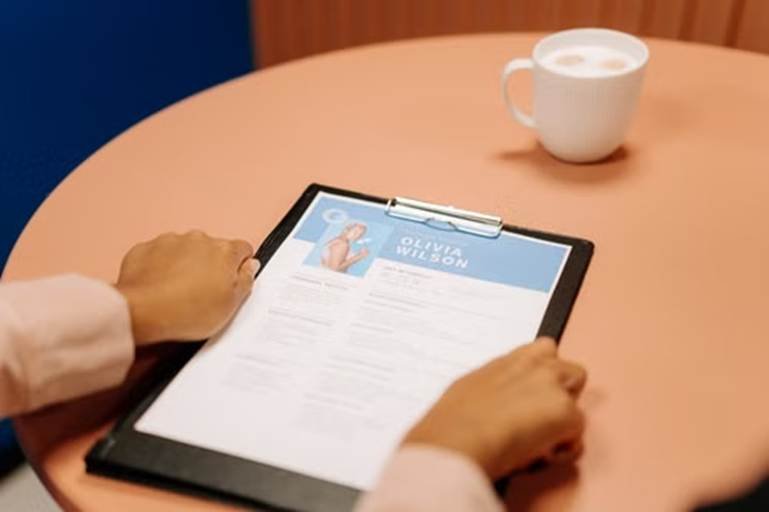
Your featured section should back it up wherever possible. When looking for remote LinkedIn jobs, make sure that preferences concerning remote work and relevant skills are clear, but without creating a keyword soup in your entire profile.
Before and After LinkedIn Profile Example
Imagine a hypothetical job candidate called Sarah.
- The headline she has is
- A representative of customer service.
- In the About section, she has only included:
- A better headline could be
A professional customer support expert in chat and email support and CRM management. The About section can feature information about the candidate’s communication with customers, solving problems, knowing about CRMs, providing written support, and organizing follow-ups. This is not an issue of turning a candidate into a more impressive person but of making it easier for employers to get to know her skills.
Make sure to regard your LinkedIn profile as more than just a file with information and figures contained in your CV. You should always remember how your possible future employers or recruiters are going to see you via your profile.
The very first thing to do is to note crucial elements: improve your headline, write an interesting In the About section, present your responsibilities as accomplishments, highlight your remote-friendly abilities, and showcase the projects you were successful in. The next step is to communicate with others and keep your profile updated.
The main goal is neither to do everything perfectly nor to make a great impression among people. As a matter of fact, people looking for remote candidates will have every reason to stop at your profile if it is nicely organized.
Discover more from USAMallu
Subscribe to get the latest posts sent to your email.